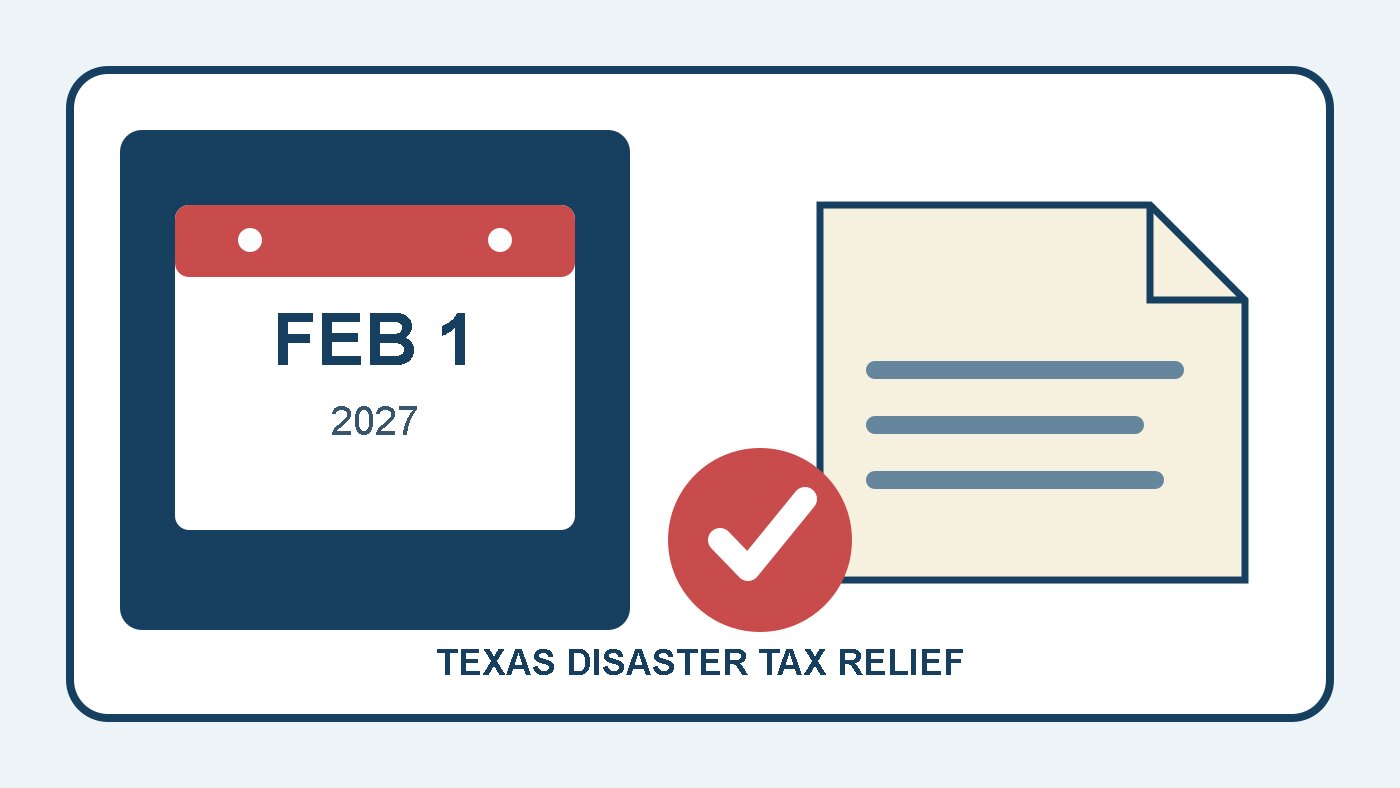
New Texas disaster tax relief gives qualifying individuals and businesses until Feb. 1, 2027, to complete many federal tax filings and payments that were due from July 14, 2026, through Jan. 31, 2027.
The Internal Revenue Service notice, issued Oct. 27, covers people who live and businesses whose principal place of business is in 62 listed counties. The IRS says it generally applies the relief automatically to taxpayers with an address of record in the disaster area.
Texas disaster tax relief deadline map
| Item | Normal due period covered | Relief described by IRS |
|---|---|---|
| Most individual and business returns | July 14, 2026-Jan. 31, 2027 | File by Feb. 1, 2027 |
| Estimated income tax payments | Due on or after July 14, 2026 | Pay by Feb. 1, 2027 |
| Quarterly payroll and certain excise returns | Normally due July 31 or Nov. 2, 2026 | File by Feb. 1, 2027 |
| Certain payroll and excise deposits | Due July 14-28, 2026 | Penalty relief only if deposited by July 29 |
| Common information returns | W-2, 1094-1099 and several others | Generally not postponed |
The covered counties include major population centers such as Bexar, Harris, Travis, Williamson, Fort Bend and Galveston, as well as dozens of Hill Country, South Texas and rural counties. The official IRS notice contains the complete county list and should be checked before relying on the postponement.
Taxpayers outside the listed area may still qualify when records needed to meet a deadline are located inside it. The IRS directs those taxpayers to its Special Services line at 866-562-5227 rather than assuming the relief will appear automatically.
Extended returns do not move every old payment
The Feb. 1 date applies to affected taxpayers who received a valid extension to file a 2025 individual return. It does not postpone the related 2025 tax payment that was due April 15, 2026, because that payment fell before the disaster period.
That distinction matters: an extension of time to file is not always an extension of time to pay. The Daily Quill’s Business and Money desk tracks other official deadline changes, while Consumer Guides covers practical verification steps.
Installment agreements also require a careful reading. The IRS says reminder notices and direct debits continue. A missed payment due during the postponement period will not cause the agreement to default, but ordinary interest and late-payment penalties can continue to accrue.
What affected taxpayers can verify now
Keep the Oct. 27 IRS notice with the relevant filing records, confirm that the address and county match the covered area, and separate postponed returns from excluded information returns or deposits. Anyone receiving a penalty notice for a deadline inside the postponement window should use the phone number printed on that notice.
This article summarizes a federal notice and is not individual tax advice. A taxpayer with an unusual entity, filing location, payment plan or record-storage situation should use the official IRS guidance or a qualified tax professional. The controlling date for most covered actions is Feb. 1, 2027.