Texas waterfowl gear can move invasive plants and microscopic mussel larvae from one lake to another, and transporting a prohibited aquatic invasive species can bring a fine of up to $500 per violation.
The Texas Parks and Wildlife Department waterfowl notice, published Oct. 29, tells hunters to clean, drain and dry boats, trailers, waders, decoys and other equipment before traveling between water bodies.
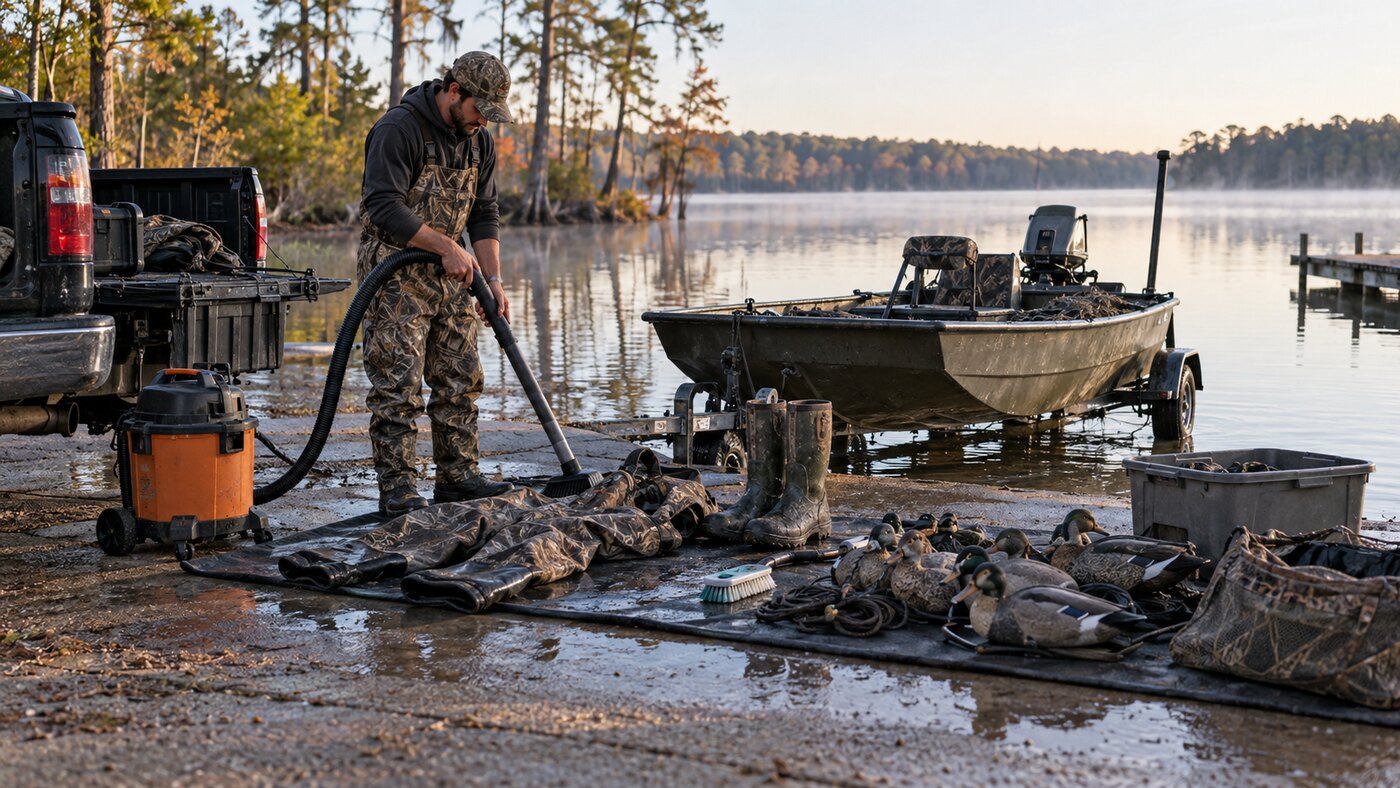
The warning is not limited to visible plants on a propeller. Water trapped inside a decoy or mud pressed into a boot tread can also move organisms or plant fragments.
Texas waterfowl gear cleaning matrix
| Equipment | Main transfer point | TPWD cleaning step |
|---|---|---|
| Boat and trailer | Plants around bunks, lights, plates and hardware | Hand-remove material; use a wet/dry vacuum before rinsing tight spaces |
| Waders and boots | Mud, plants and organisms in seams and treads | Remove debris, rinse and scrub boot treads with a stiff brush |
| Decoys | Residual water or fragments inside cracked shells | Drain completely; consider drain holes in older damaged decoys |
| Decoy bags and marsh sleds | Wet plant fragments and mud | Empty, clean and allow the equipment to dry before reuse |
| Anchors and lines | Attached mussels, plants or larvae in retained water | Inspect, clean and dry before the next launch |
This Daily Quill table reorganizes TPWD’s gear-specific directions so hunters can match the action to the equipment rather than applying one rinse to everything.
The legal rule and the recommended process
Texas law requires boaters to drain all water from boats and onboard receptacles, including bait buckets, before leaving or approaching fresh water. Boaters must also remove invasive plants from the boat, trailer, launch vehicle and equipment before leaving a lake.
Clean, drain and dry is the broader prevention method. The legal water-drain and plant-removal duties apply even when a hunter does not see an established infestation at the launch site.
TPWD reports that giant salvinia is present on 30 East Texas lakes and in rivers, creeks and marshes largely between Houston and Beaumont. Zebra mussels are found in 40 Texas lakes across eight river basins, plus downstream river reaches.
Those figures should not be added into a claim that 70 different lakes are infested. Some water bodies could appear in more than one category, and the source does not publish a deduplicated combined total in this notice.
Why decoys and waders need attention
Giant salvinia can reproduce from a single moved fragment and can double its coverage area in a week. Thick mats can block access and displace plants used by waterfowl.
Zebra mussel larvae can be too small to see. Residual water in a boat or decoy can therefore carry risk even when the gear looks clean. Once the mussels are established, management often shifts from eradication to limiting damage to ecosystems and water infrastructure.
A hose alone can also push plant fragments into small spaces. TPWD recommends a wet/dry vacuum for boats, trailers and much equipment before rinsing, while waders and decoys can be rinsed after visible material is removed.
Texas waterfowl gear needs the same inspection after a short hunt as it does after a full weekend. Time on the water does not determine whether a seed, plant fragment or retained splash moved with the equipment. The relevant question is whether the gear contacted water or wet vegetation and then left the site without being cleaned, drained and dried.
Reporting a new sighting
TPWD asks people who find an invasive species in a water body where it has not been reported, or see organisms being transported on equipment, to report the location. The release provides 512-389-4848 and aquaticinvasives@tpwd.texas.gov for photos and location information.
Photograph the organism and record the water body before cleaning Texas waterfowl gear for transport. That preserves useful location evidence while still allowing the equipment to be cleared before the next launch.
Readers following Texas environmental conditions can use The Daily Quill’s Science and Environment desk. Before the next launch, the practical final check is whether every water-holding compartment, decoy and piece of wearable gear is empty, visibly clean and given time to dry.