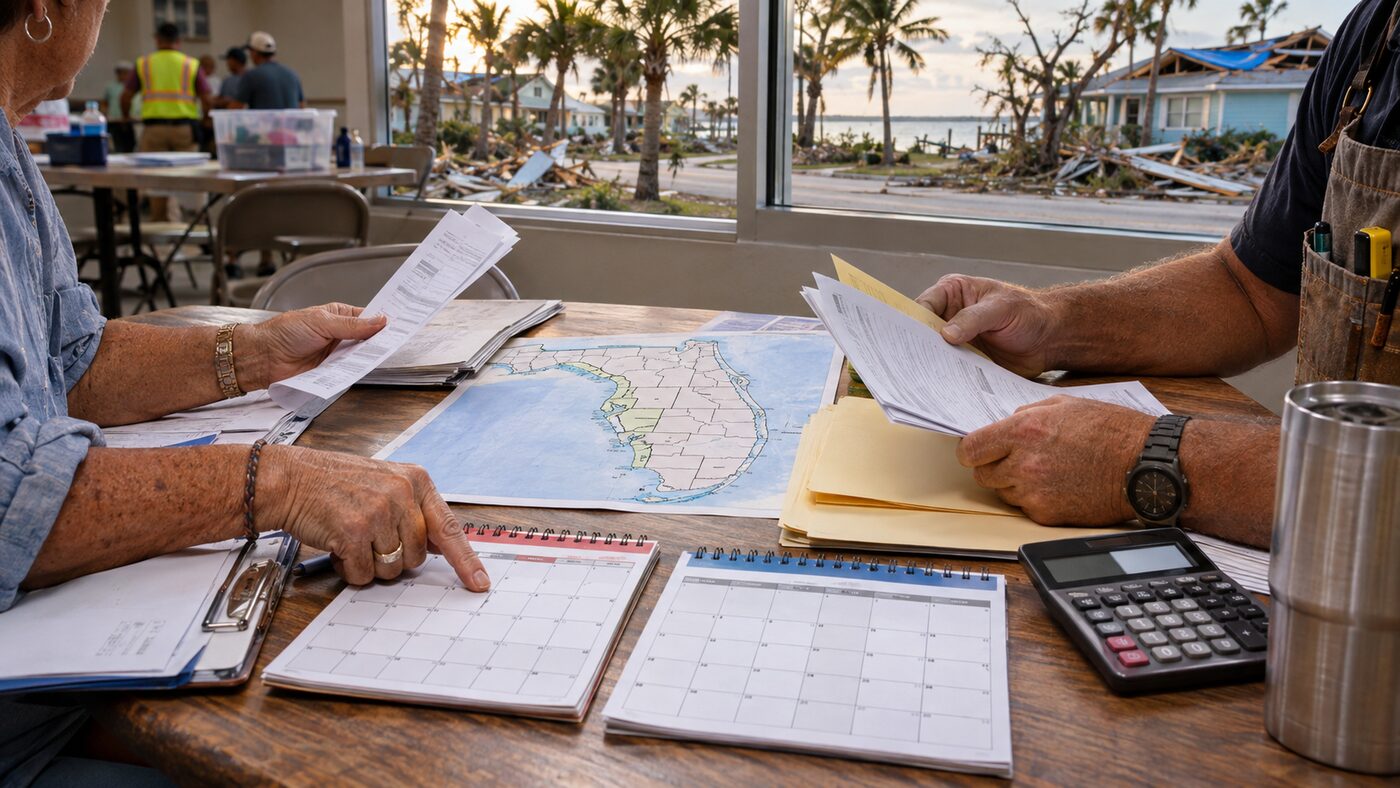
Florida Hurricane Isaias disaster loans follow two different county lists. Eight northwest Florida counties can use the new federal declaration for both physical damage and economic injury, while eight neighboring counties, including four in Alabama, have a narrower path limited to economic injury.
The distinction appears in the U.S. Small Business Administration notice published in the Nov. 4 Federal Register. The physical-damage application deadline is Dec. 28, 2026. The economic-injury deadline is July 27, 2027.
Those are separate clocks. A business owner should first identify the county where the damaged property or economic loss occurred, then choose the correct loan category rather than treating every county in the declaration alike.
For Florida Hurricane Isaias disaster loans, the controlling detail is not simply whether a county appears in the declaration. It is the category under which that county appears.
Florida Hurricane Isaias disaster loans by county
| Eligibility path | Counties | Available purpose |
|---|---|---|
| Physical damage and economic injury | Bay, Escambia, Gulf, Holmes, Okaloosa, Santa Rosa, Walton and Washington | Repair or replace eligible damaged property; qualifying businesses may also seek working-capital help |
| Economic injury only in Florida | Calhoun, Franklin, Jackson and Liberty | Qualifying working-capital needs tied to the disaster |
| Economic injury only in Alabama | Baldwin, Covington, Escambia and Geneva | Qualifying working-capital needs tied to the disaster |
The county split means a resident or business in a contiguous county should not use the Dec. 28 physical-damage deadline as proof that a property-repair loan is available there. The Federal Register lists those counties only under the economic-injury category.
Florida’s Hurricane Isaias recovery page separately confirms individual assistance for the same eight primary Florida counties. It also lists 15 counties approved for public assistance, a government and eligible nonprofit recovery program. That public-assistance list is broader than the eight-county SBA physical-loan list and should not be substituted for it.
Two deadlines, three kinds of applicants
The SBA says physical-damage loans can serve homeowners, renters, businesses of all sizes and private nonprofit organizations when eligible losses are not fully covered by insurance or other sources. Economic Injury Disaster Loans are designed for qualifying businesses, small agricultural cooperatives and private nonprofits that need working capital because of the disaster.
| Applicant question | Record to check first | Current deadline |
|---|---|---|
| Was a home, personal property or business property physically damaged? | Property county on the primary-county list | Dec. 28, 2026 |
| Did a business lose revenue or face operating costs because of the storm? | Primary or contiguous county list | July 27, 2027 |
| Is the request for a county, city or eligible public-service nonprofit facility? | FEMA public-assistance designation and the separate public-assistance SBA notice | Program-specific |
Florida Hurricane Isaias disaster loans do not automatically cover every loss. Insurance proceeds and other recovery payments can affect the eligible amount, and SBA makes the final lending decision. Applicants should keep repair estimates, insurance correspondence, photographs, revenue records and expense documentation that connect the loss to the Oct. 6-12 incident period.
Interest rates in the federal notice
The notice lists physical-damage rates of 6% for homeowners with credit available elsewhere and 3% for homeowners without it. Businesses are listed at 8% with credit available elsewhere and 4% without it. Private nonprofits are listed at 3.625%. Economic-injury rates are 4% for businesses and small agricultural cooperatives without credit available elsewhere and 3.625% for private nonprofits.
Those published rates do not guarantee a loan or a particular amount. They show the maximum categories in the declaration notice; the application review determines eligibility, terms and the relationship to insurance coverage.
Residents comparing recovery programs can also use The Daily Quill’s earlier Florida cleanup funding analysis for a separate environmental program, but it is not part of Hurricane Isaias assistance. The site’s business and money hub collects other deadline-driven funding reports.
The next hard date is Dec. 28. Anyone pursuing physical-damage help should confirm the property county in the SBA declaration and begin through the official SBA disaster portal before that deadline rather than relying on a county’s presence in a broader recovery list.