Florida living shoreline permit rulemaking moved into the formal proposal stage this week, creating a public record for a statewide general-permit framework aimed at nature-based shoreline erosion work.
The Florida Department of Environmental Protection rulemaking page says the notice of proposed Rule 62-330.604 was published Nov. 2. The proposal covers installation, construction and maintenance of living shorelines under the state’s environmental resource permitting chapter.
It is not yet accurate to describe the proposal as a final, effective permit rule.
Florida living shoreline permit status
| Record | Date or status | What it establishes |
|---|---|---|
| Rule-development notice | Oct. 20, 2025 | Opened the development process |
| Public workshop | Nov. 7, 2025 | Allowed discussion of the draft approach |
| Proposed-rule notice | Nov. 2, 2026 | Moved Rule 62-330.604 into the proposed stage |
| Final effective rule | Not shown on the DEP page | Should not be assumed from the proposal notice |
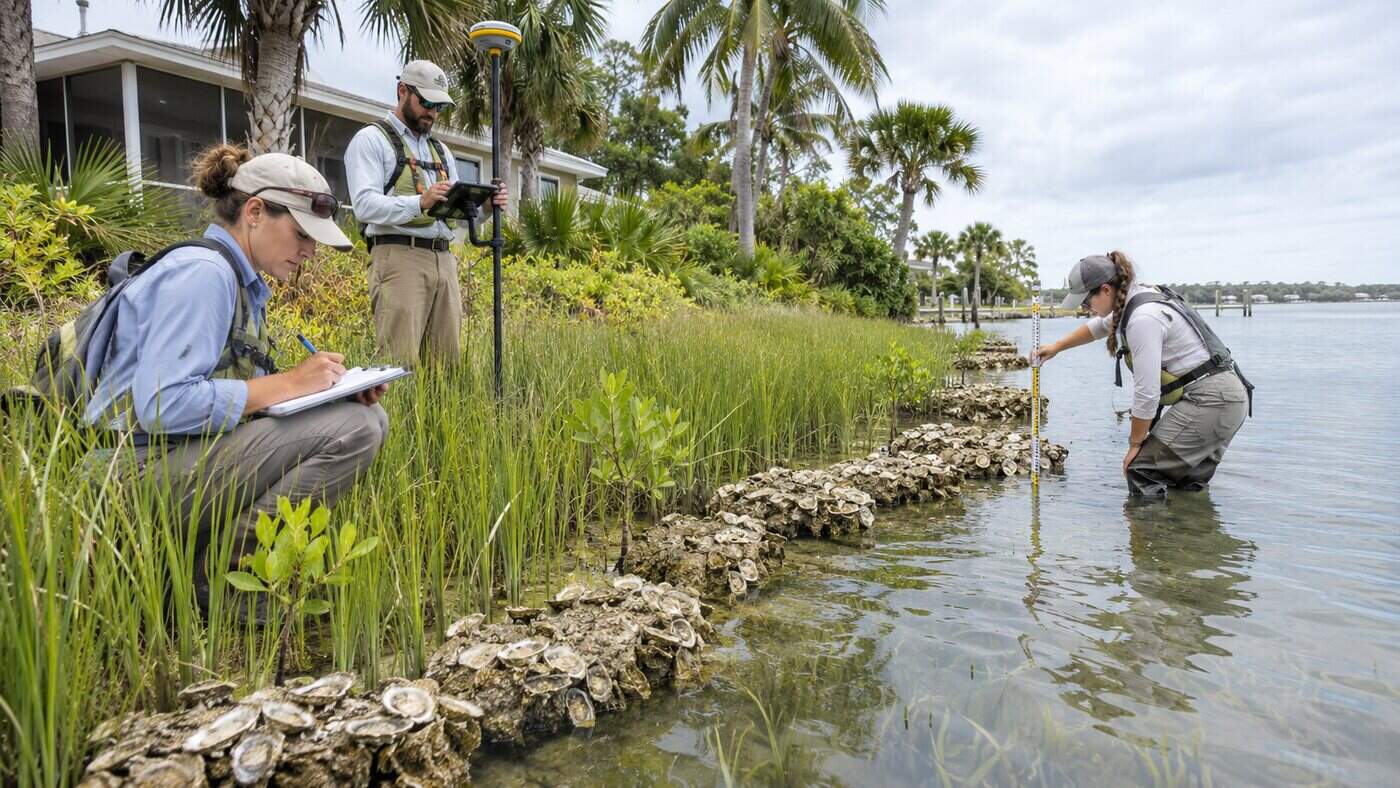
DEP describes the intended framework as a general permit for nature-based solutions addressing shoreline erosion. Living shorelines commonly use planted vegetation and compatible natural materials to stabilize an edge while retaining habitat functions, but the controlling requirements will be the final rule and incorporated permit documents.
The Daily Quill’s regional topic directory collects continuing Gulf Coast coverage. For an actual project, DEP’s rulemaking and permitting records remain the authoritative sources.
What a general permit would change
A general permit is designed to create a defined path for projects that fit stated conditions. It is not a blanket exemption from review. The value of the Florida living shoreline permit proposal will depend on the final eligibility limits, application materials and conditions attached to construction and maintenance.
For a waterfront owner, the first question is therefore not simply whether the project uses plants or oyster material. The relevant questions include where the work sits relative to the property line and submerged lands, how far it extends waterward, which habitat is already present and whether navigation or protected resources could be affected.
Contractors and local governments also need a stable way to distinguish a qualifying project from one that requires individual review. A clear screening process could reduce uncertainty for routine work without removing site-specific safeguards. The proposal record must show where that line will be drawn.
The Florida living shoreline permit record will also need to identify which forms, drawings and certifications accompany a qualifying application. Those details determine whether the new path is predictable in practice.
Why the procedural label matters
An application submitted today must follow the rules and agency instructions currently in effect. A proposed rule can show where the program is heading, but it does not by itself prove that a particular design qualifies for the future general permit.
Property owners, contractors and local governments also should not assume that the new framework will replace every other authorization. Shoreline work can involve environmental resource permitting, submerged lands, local approvals and site-specific resource constraints.
The proposed Florida living shoreline permit also should not be read as permission to begin work before authorization. Buying materials, signing a construction contract or relying on a conceptual drawing does not establish that a site qualifies. Applicants should identify the current permit path before committing to a construction schedule.
Until an effective rule is recorded, references to a Florida living shoreline permit should distinguish the proposed framework from the permits and authorizations currently available.
The Daily Quill compared the dated records on DEP’s development page rather than treating the newest draft as a completed policy. That leaves three practical questions for the final record:
| – Which project dimensions and materials will fit the general permit? |
|---|
| – Which monitoring or maintenance duties will continue after construction? |
Those details affect costs after installation as well as approval before it. A planting plan may require replacement of failed vegetation, while structural or oyster components may carry inspection or maintenance duties. The final text will determine which obligations belong to the permittee and how compliance is documented.
What to watch next
DEP lists Rule 62-330.604 under Submerged Lands and Environmental Resources Coordination and provides the November 2026 draft alongside the proposed-rule notice. The page names agency contacts for technical questions.
The next reliable milestone is a final rule filing, effective date or formal change in the official record. Until one appears, applicants should use the current DEP permitting process and identify the exact authorization their site requires.
Anyone tracking the rule should compare the next official document with the Nov. 2 proposal rather than assuming the language remains unchanged. Dates, incorporated forms and eligibility conditions can change during rulemaking, and the effective version is the one that controls a future application.