Florida farm easements now protect 827 acres across three working properties in DeSoto, St. Johns and Polk counties. The state paid a combined $5.189 million for development rights while the land remains in private agricultural ownership and production.
The three easements cover two cattle ranches and a St. Johns County property with upland and wetland habitat. All three are enrolled in Florida agriculture best-management practices and lie within the Florida Ecological Greenways Network or the Florida Wildlife Corridor.
Florida farm easements by property
The Nov. 10 FDACS record provides acreage, price and environmental details for each property.
| Property and county | Protected acres | Easement total | Approximate cost per acre | Named land or water features |
|---|---|---|---|---|
| Outer Limits Ranch, DeSoto County | 100 | $425,000 | $4,250 | Pasture, hardwoods, depression marshes and wetlands draining to the Peace River watershed |
| Saturiwa, St. Johns County | 92 | $1,939,000 | $21,076 | McCullough Creek at the St. Johns River, pine flatwoods, cypress domes and bottomland forest |
| B Bar J Ranch, Polk County | 635 | $2,825,000 | $4,449 | Pasture, fallow orchards, cropland, forested wetland, marshes and adjacency to Lake Buffam Wildlife Refuge |
| Combined | 827 | $5,189,000 | About $6,274 | Three counties and multiple working-land habitat types |
The combined per-acre figure divides the published easement total by the published acreage. It is not an appraisal of any single property; the wide property-level range shows why one statewide average cannot explain individual easement values.
An easement is not a state land purchase
Florida’s Rural and Family Lands Protection Program purchases development rights rather than acquiring the entire farm. The owner keeps the land, agricultural operations can continue and the easement prevents future development that conflicts with its terms.
These Florida farm easements preserve that ownership structure while placing permanent limits on development. The transaction is narrower than a state purchase of the land itself.
That distinction also means the announcement does not make the properties public parks. The farms remain private unless an owner separately provides public access.
The program describes this structure as a way to preserve food, timber and other agricultural production while protecting natural resources. It also avoids the continuing management cost associated with full state ownership.
Why the three locations differ
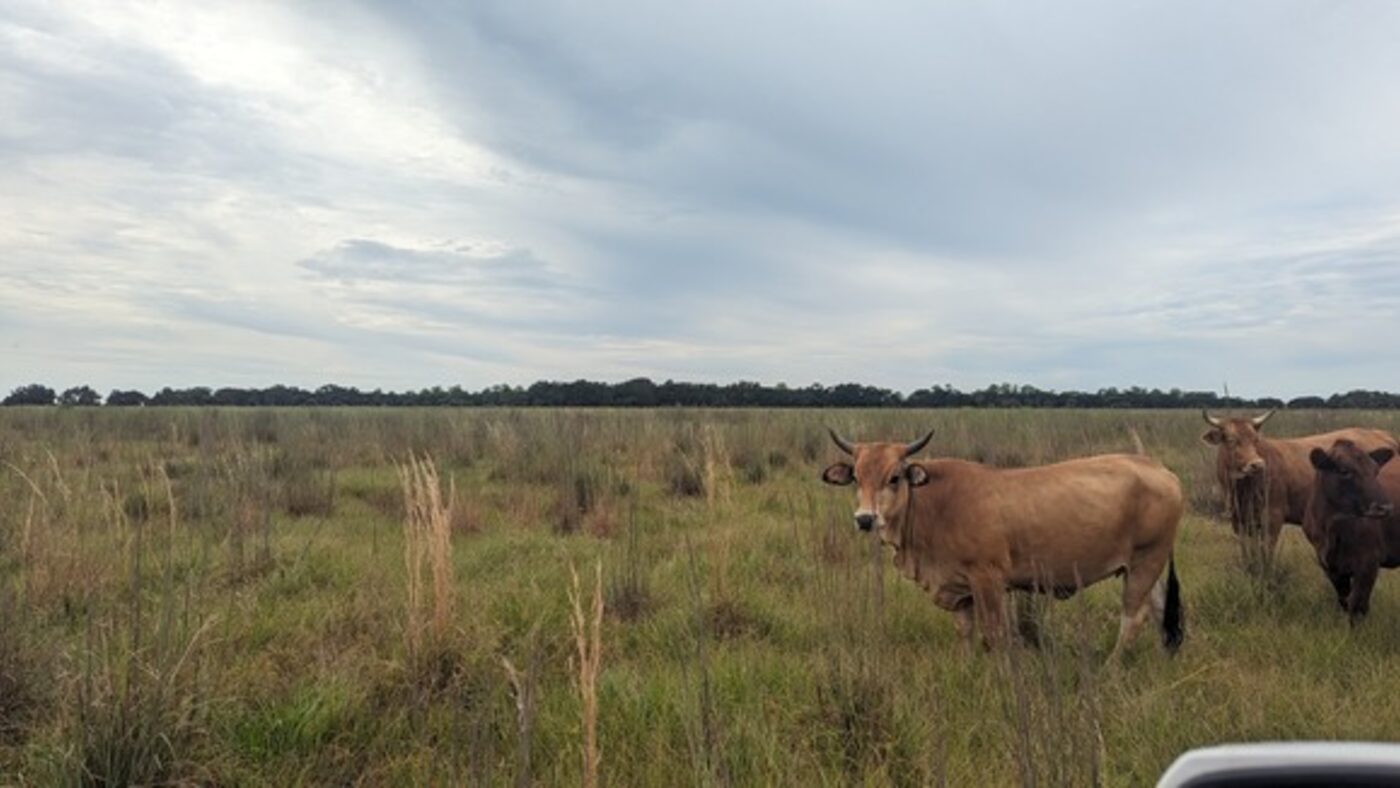
Outer Limits Ranch is a roughly 100-acre cattle operation in the Peace River watershed. Its pasture is interspersed with hardwood areas and small depression marshes, so the easement connects working land with water-resource protection.
Saturiwa is the smallest property in acreage and the highest in published cost per acre. Its western boundary meets McCullough Creek near the St. Johns River, and the state describes a mix of pine flatwoods, cypress domes, bottomland forest and aquatic-bird habitat.
B Bar J Ranch accounts for about 77 percent of the combined acreage. The 635-acre Polk County property includes improved pasture, fallow orchard, cropland and a large freshwater forested wetland. Its southern parcel adjoins Lake Buffam Wildlife Refuge.
How this batch fits the statewide program
FDACS says the program has permanently preserved more than 257,000 acres since it began in 2001. More than 192,000 acres were preserved during the current agriculture commissioner’s administration, according to the department.
The new Florida farm easements add three property records to that long-running total, but the department’s cumulative figure remains the better measure of statewide scale.
The three-property batch represents about 0.32 percent of that 257,000-acre cumulative total. That calculation gives scale to the announcement without treating the three farms as the whole program.
The department says state funding secured for the program since 2022 exceeds $1.1 billion, including $425 million in the 2026-27 state budget. The completed-project story map is the program’s location resource, though individual map records should be checked before drawing parcel-level conclusions.
Readers can follow land, water and habitat reporting in Science and Environment and related public-investment analysis in Business and Money.
The permanent easements do not have a closing date. The next useful update will be a new completed-project record or a revised statewide acreage total from FDACS, which should be added to this page rather than spun into a duplicate overview.