
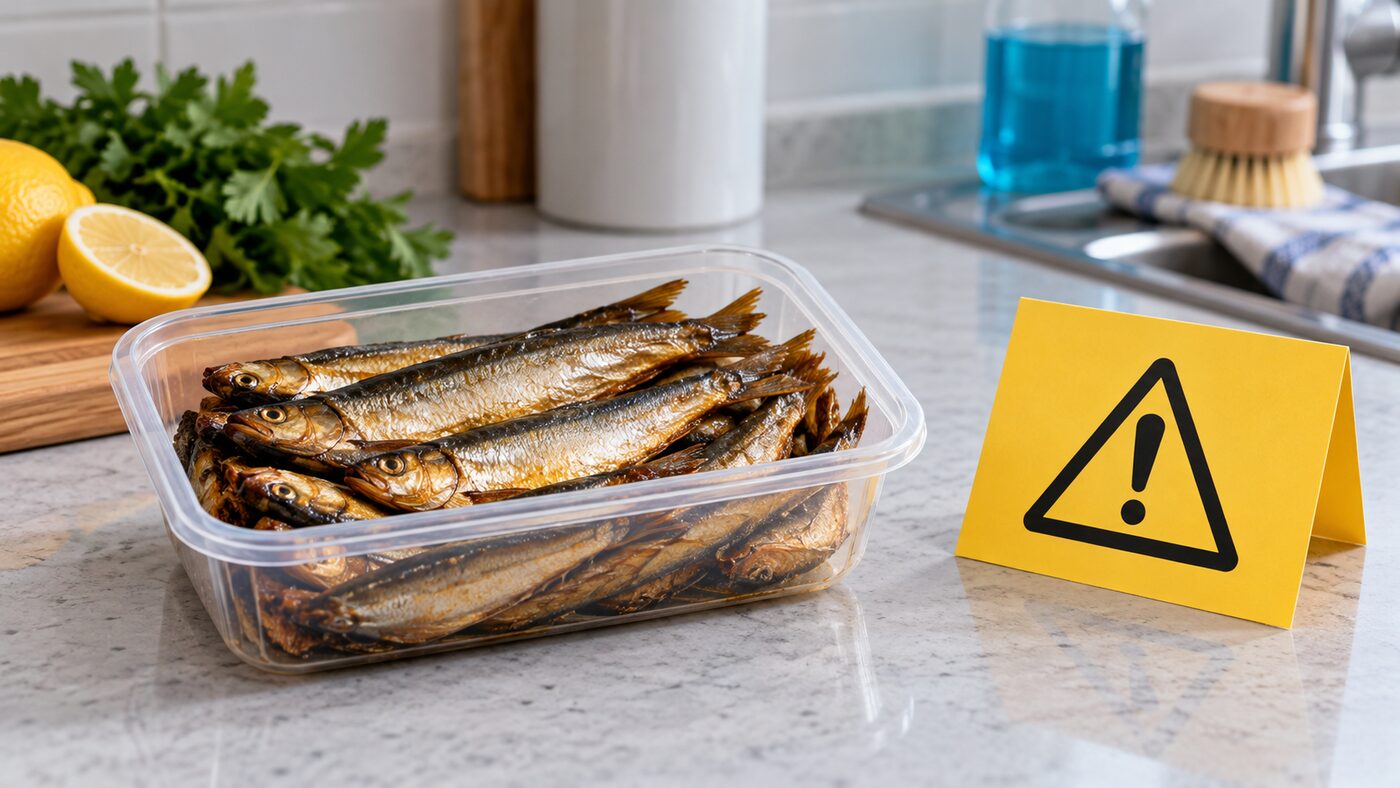
The FDA cold-smoked sprats warning issued Friday tells consumers to avoid the product marketed by Haifa Smoked Fish Inc. Its parent company is D&M Smoked Fish Inc. The agency says the fish may pose a botulism risk because required production controls were not in place.
The warning covers all lots, not one date code or package size. The fish were shipped refrigerated in bulk cardboard boxes, may have been frozen for as long as a year and could have been sold from restaurant kitchens or grocery seafood counters without a label.
What the FDA cold-smoked sprats warning covers
The Food and Drug Administration confirmed distribution to Connecticut, New Jersey, New York and Pennsylvania. It cautioned that the product may have reached additional states, so the warning is not limited to shoppers in those four states.
The FDA cold-smoked sprats warning matters beyond packaged grocery products because some of the fish may have been sold loose. A shopper may therefore need a receipt, store record or help from the seafood counter to identify the supplier.
The agency said its inspection found that the Jamaica, New York, company produced cold-smoked sprats without required controls intended to prevent growth and toxin formation from Clostridium botulinum. According to the FDA’s Oct. 23 update, the agency recommended a recall of all affected sprats still on the market, but the firm declined.
That makes the product description especially important. Consumers should look for cold-smoked sprats connected to Haifa Smoked Fish or D&M Smoked Fish, including fish bought loose at a seafood counter. The FDA’s full product alert includes product and shipping-label images.
What consumers and food businesses should do
The FDA says consumers should not eat the affected fish. If the seller or brand cannot be confirmed, the agency advises discarding the sprats or contacting the place of purchase. It also warns that contamination may not change how food looks, smells or tastes.
Retailers, restaurants, wholesalers and food-service operators should not sell or serve the product. The FDA recommends carefully cleaning and sanitizing surfaces or containers that touched it to reduce possible cross-contamination.
Because the sprats may remain frozen for up to a year, checking older packages matters. Do not taste the fish to decide whether it is safe. Keep the packaging or purchase information available if a retailer, health department or medical professional asks for details.
The FDA cold-smoked sprats warning does not provide a safe lot number, sell-by date or package size. Its scope covers all lots linked to the named supplier. Consumers should not assume an older purchase is outside the warning merely because it predates the agency’s announcement.
Botulism symptoms require immediate care
The Centers for Disease Control and Prevention describes botulism as a medical emergency. Possible symptoms include difficulty swallowing, muscle weakness, double or blurred vision, drooping eyelids, slurred speech, difficulty moving the eyes and difficulty breathing. Foodborne cases may also involve nausea, vomiting, stomach pain or diarrhea.
Anyone who develops possible symptoms after eating the product should seek emergency medical care immediately rather than waiting for every symptom to appear. The CDC’s botulism symptom guide says the illness can weaken the muscles used for breathing and can be fatal.
The FDA also provides an online route to report product complaints or adverse events. A report is not a substitute for urgent medical care when symptoms are present.
How to follow updates
The FDA said it will update the warning as more information becomes available. Consumers should return to the agency’s alert for any newly identified states, product details or recall information.
Until that guidance changes, the FDA cold-smoked sprats warning remains straightforward: do not eat the identified product, do not rely on appearance or smell, and treat possible botulism symptoms as an emergency.
The Daily Quill will also track material updates in its United States news coverage. This article will be corrected or expanded if the FDA changes its advice.
This report summarizes federal food-safety guidance and does not replace advice from a medical professional. Suspected botulism requires immediate medical attention.