
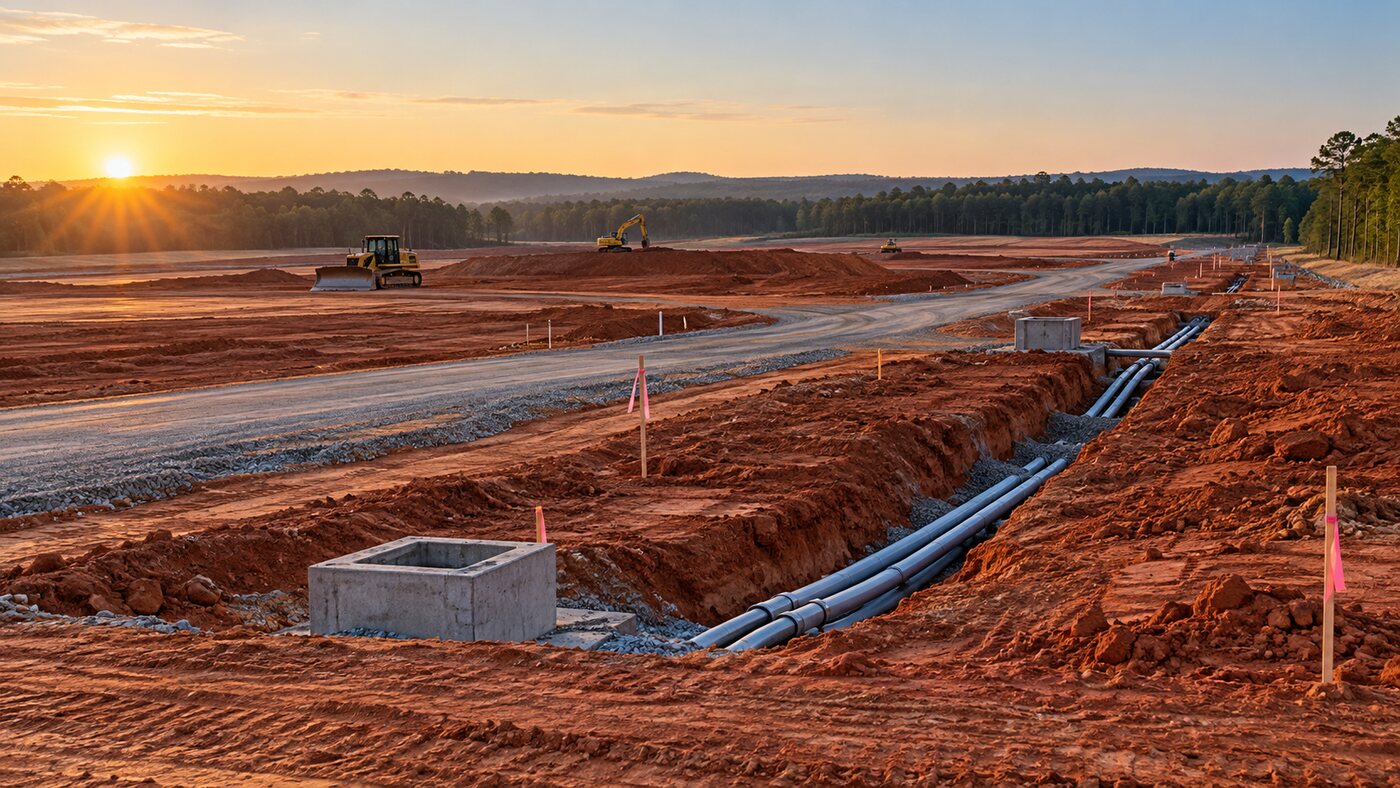
Alabama site awards will direct $9,411,162 to five publicly owned industrial properties for land preparation and infrastructure, with the largest amount going to Dothan’s Westgate Super Site.
The Alabama Growing Alabama awards 2026 announcement identifies projects in Aliceville, Dothan, Guntersville, Pell City and Walker County. The money is for site readiness. The announcement does not identify a company moving to any of the properties or promise a specific number of jobs.
Alabama site awards by community
| Community and recipient | Site | Award | Share of this round | Stated use |
|---|---|---|---|---|
| Dothan Industrial Development Board | Westgate Super Site | $3,500,000 | 37.2% | Site work and public infrastructure |
| Aliceville Industrial Development Board | Aliceville Industrial Park | $2,200,000 | 23.4% | Site work and public infrastructure |
| Walker County Economic and Industrial Development Authority | Heritage Industrial Park | $2,100,000 | 22.3% | Site work and public infrastructure |
| Pell City Industrial Development Board | Cogswell Industrial Park | $1,000,000 | 10.6% | Site work and public infrastructure |
| Guntersville Industrial Development Board | Conners Island Business Park | $611,162 | 6.5% | Site work and public infrastructure |
The Daily Quill calculated the percentages from the five published award amounts. Together, Dothan, Aliceville and Walker County account for about 82.9% of this round.
The average award is about $1.88 million, but that figure hides the concentration at the top. The median award is $2.1 million, while the difference between the largest and smallest awards is $2,888,838. Those comparisons help residents see the distribution without suggesting that each project has the same size, cost or construction need.
What the program pays for
Growing Alabama uses private contributions to approved economic-development organizations. Donors receive a state tax credit equal to the value of an eligible contribution, while the contribution finances approved public projects.
Eligible work can include site preparation and infrastructure on publicly owned industrial land. The program can also support capital improvements at inland ports and intermodal facilities, along with construction or maintenance at agricultural centers.
That distinction matters when reading an award announcement. Site-readiness money can remove obstacles such as incomplete roads, utilities or grading before a business chooses a location. It is not the same as a company announcing a factory, construction schedule or hiring plan.
The five awards add to about $20 million announced in May. State officials say more than $29 million is available through the program during 2026 and that more than 35% of this year’s funding has gone to rural Targeted Counties.
What the announcement does not establish
The Alabama site awards record does not publish construction start dates, contractor names or itemized budgets. It also does not say that a manufacturer has selected any of the five properties. Those details require later local records.
For each site, residents can separate four milestones that are sometimes compressed into one development headline:
- The state approves site-readiness funding.
- A local board procures and completes the infrastructure work.
- A company selects the prepared property and announces its own investment.
- Construction, hiring and production begin on disclosed schedules.
This round confirms the first step. The remaining steps may occur later, but none should be assumed from the funding decision alone.
What residents can verify next
The local development boards are the entities tied to each project, so later meeting records, bid notices and construction contracts should show how the broad descriptions become specific work. Those records will also establish the schedule and whether the final project scope changes. Following the Alabama site awards through those records will show whether the public infrastructure reaches completion and what it actually delivers.
Readers following Alabama investment can compare this site-readiness round with the separate Hyundai Montgomery manufacturing expansion, where a named company disclosed a production plan. The two announcements represent different stages of economic development.
The state release lists the Alabama Department of Commerce as the program contact. The next useful evidence will be executed project agreements, local procurement records and construction milestones rather than estimates about companies or jobs that have not been announced.