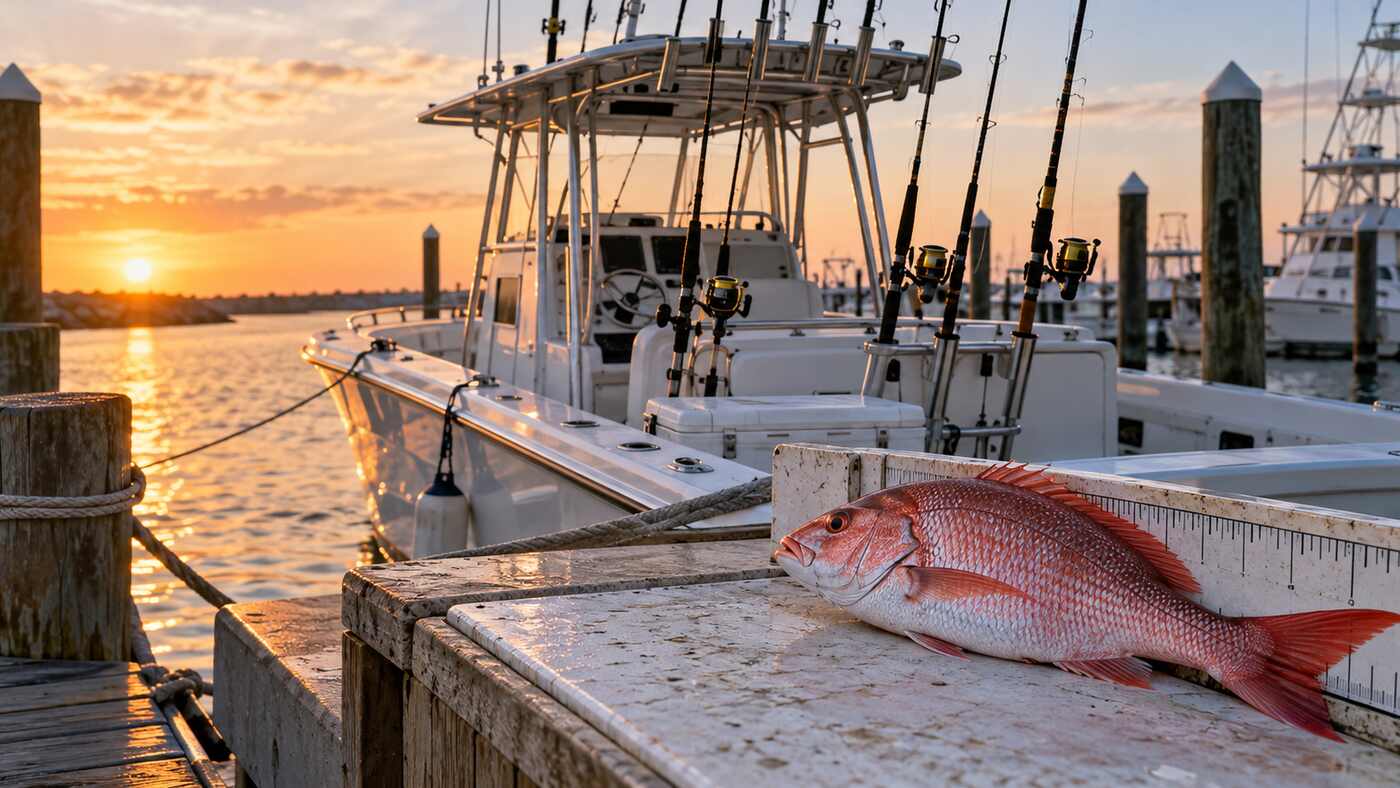
The Alabama red snapper season now has a sharp split. The 2026 season for federally permitted Gulf for-hire reef-fish vessels ended one minute after midnight as Monday, Oct. 26, began. Alabama’s private angler and state-licensed charter season remains scheduled to run through Dec. 31 unless the state quota is met sooner.
That distinction turns on the vessel and permit, not simply whether an angler paid for a trip. Before leaving the dock, anglers and operators should identify which regulatory lane applies and check for any newer closure notice.
Alabama red snapper season decision table
| Trip type | Status after 12:01 a.m. Oct. 26 | Important condition |
|---|---|---|
| Federally permitted for-hire reef-fish vessel | Closed for red snapper harvest | The 147-day federal for-hire season ended Oct. 26 |
| Private recreational vessel | Open under Alabama season | Seven days a week through Dec. 31 or an earlier quota closure |
| Alabama commercial party boat without a federal for-hire permit | State rules may apply | Must remain inside the nine-mile state-waters line and meet state license and endorsement rules |
The Alabama Marine Resources Division lists a 664,552-pound private angler quota for 2026. The agency says it will announce a closure if landings are projected to meet that quota before Dec. 31. NOAA’s current landings and closure table separately marks the federal for-hire component closed Oct. 26.
Licenses, endorsement and Snapper Check
An open season is only one part of a legal trip. The state says anglers need an Alabama saltwater fishing license or saltwater angler registry, as applicable, plus a Gulf Reef Fish Endorsement to land reef fish.
Harvest reporting through Snapper Check is mandatory for red snapper, gray triggerfish and greater amberjack landed in Alabama. That reporting duty supports the state’s landings estimate and helps managers determine whether the quota is approaching its limit.
State guidance for the Alabama red snapper season also distinguishes state-licensed charter vessels from vessels holding a federal reef-fish for-hire permit. Operators should not assume that fishing inside state waters changes the federal permit obligations attached to a federally permitted vessel.
What anglers should verify before departure
First, ask the operator which permits the vessel holds. Second, review the current Alabama season notice and NOAA closure information. Third, confirm licenses and endorsements for everyone who needs them. Fourth, make sure someone on the trip is prepared to complete the required Snapper Check report.
Anglers should also verify current size and creel limits. Season dates, limits and emergency closures can change, so a saved screenshot or an older calendar is not a substitute for the current official notice.
A dockside checklist can prevent the most common category mistake: record the vessel name, ask whether it carries a federal reef-fish for-hire permit, note whether the trip will enter federal waters, and open the current state and NOAA notices before departure. If the operator cannot clearly identify the permit class, pause the trip until the status is confirmed. The Alabama red snapper season depends on that classification, and a general promise that “snapper is open” is not enough.
Why two seasons can have different dates
Federal for-hire fishing and Alabama-managed private recreational fishing operate under different management components. NOAA set the 2026 federal for-hire window at 147 days, from June 1 through the early morning of Oct. 26. Alabama’s state-managed private season opened May 22 and is tied to the state’s quota and year-end limit.
That is why the phrase “red snapper season is closed” is incomplete without a vessel category. The federal for-hire closure does not automatically close every private Alabama trip, and the continuing state season does not reopen harvest on a federally permitted for-hire vessel.
The simplest safe rule is to match the trip to the permit before relying on a date. As of Oct. 26, the Alabama red snapper season remains open for qualifying private and state-licensed trips, while the federal for-hire component is closed.
For more verified conservation and outdoor updates, visit The Daily Quill’s science and environment desk.