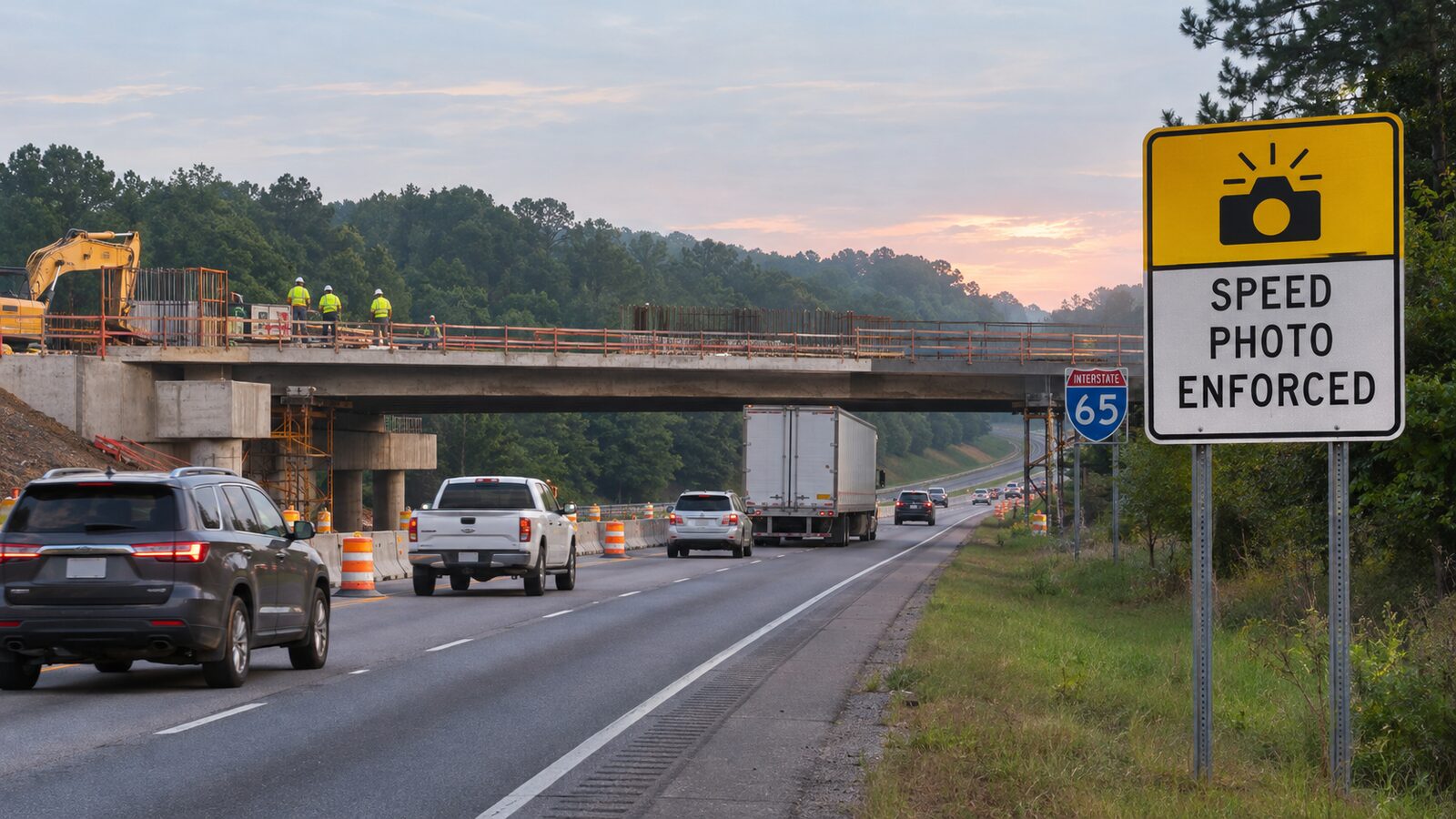
I-65 photo enforcement is being installed near milepost 209 in Chilton County, but drivers should not confuse equipment setup with immediate ticketing. The state says civil citations can begin no earlier than Monday, Nov. 16, after signs and a warning phase.
The pilot covers the Walnut Creek Bridge replacement work zone between Birmingham and Montgomery. Under the Alabama Department of Transportation’s implementation page, a vehicle must be recorded traveling more than 10 mph above the posted limit while workers are present before the record can enter the citation-review process.
What the I-65 photo enforcement pilot does
| Stage | What happens | What the driver should know |
|---|---|---|
| Equipment setup | Cameras and warning signs are installed near milepost 209 | Setup alone does not mean civil citations have started |
| Warning period | The system can identify vehicles above the statutory threshold | Watch the posted limit and the state rollout notice |
| Evidence review | ALEA reviews a potential violation recorded while workers are present | A camera record is not automatically a final citation |
| Mailed notice | The registered owner receives the evidence, amount and response choices | The notice controls the deadline and contest instructions |
| Hearing or payment | The owner may pay, seek an available option or request a hearing | A timely appeal pauses collection under the administrative process |
ALDOT manages the work-zone and transportation side of the program. The Alabama Law Enforcement Agency reviews evidence and administers civil citations and hearings. That division is important: the equipment does not independently decide liability.
The Nov. 4 ALDOT announcement says the pilot applies above the 10-mph threshold. The state page lists a $250 civil fine. The violation is civil, not criminal, and does not add driver-license points or suspend or revoke a license.
When a record can be used
The state says citation processing is limited to periods when workers are present. Records from other periods do not enter the citation workflow. Drivers will see special photo-enforcement signs before the active area.
A mailed notice should identify the date, time and location; alleged speed; applicable limit; recorded images; amount due; and ways to pay or contest it. The payment due date must be at least 60 days after issuance. Rental and leased-vehicle owners can follow the notice procedure for identifying the renter or lessee.
The practical rule is simpler than the paperwork: follow the posted limit through the Walnut Creek work zone and leave additional following distance. The threshold is not permission to drive 10 mph over the limit; ordinary speeding enforcement remains possible.
What remains unresolved
ALEA has not announced the exact first day of civil citations. Nov. 16 is the earliest possible date, not a promise that tickets begin that morning. The state also has not replaced the mailed notice with an online-only process.
This pilot is scheduled to continue through September 2028 unless the Legislature extends it. Drivers who receive a notice should use the instructions printed on that document rather than an unofficial payment link or social-media post.
Milepost 209 sits on the Birmingham-to-Montgomery corridor, so a trip can cross the pilot even when neither endpoint is local. I-65 photo enforcement is limited to this work zone; the announcement does not describe a statewide camera network. Readers planning a commercial trip can pair this notice with The Daily Quill’s Alabama permit-office holiday guide. The enforcement notice and permit restrictions answer different questions, and both should be checked before departure.
For a driver who receives mail after using the corridor, first check whether the document identifies this work zone and a time when workers were present. Compare the vehicle and speed with the notice. A timely hearing request stays collection, so a person contesting the record should follow the printed deadline instead of ignoring it. I-65 photo enforcement questions belong in the official process named on the notice; an unverified payment link creates a fraud risk.
The warning period matters because it separates installation and public notice from the earliest lawful civil citation. A camera seen beside the interstate does not by itself establish that a payable notice has been issued. Drivers should still obey the posted work-zone limit during warnings, while anyone receiving a later notice should evaluate the date, worker-presence condition and printed response options together.
The next controlling update is ALEA’s announcement of the warning period and exact enforcement date. Until then, the confirmed location is I-65 near milepost 209 at the Walnut Creek Bridge project in Chilton County.