Florida has divided $100 million evenly between springs restoration and alternative water supply work, funding 45 projects that range from septic upgrades to new water-treatment capacity.
The Florida water quality grants announcement identifies 23 springs projects and 22 alternative-supply projects for the 2026-27 fiscal year. The state published the awards Wednesday.
Florida water quality grants by program
| Program | Funding | Projects | Projected result |
|---|---|---|---|
| Springs Restoration | $50 million | 23 | More than 55,000 pounds of annual nitrogen reduction |
| Alternative Water Supply | $50 million | 22 | More than 60 million gallons per day of additional alternative supply |
| Combined | $100 million | 45 | Water-quality and supply projects across multiple regions |
The equal dollar split does not mean equal project sizes. The named examples in the state announcement total $54.7 million, leaving the full project list to account for the other awards.
Citrus County received $3 million for septic-to-sewer conversion and nitrogen-reducing upgrades tied to Chassahowitzka-Homosassa Springs and Kings Bay and Crystal River Springs. Volusia County received $4 million for septic upgrade incentives near DeLeon Spring, while DeLand received $3 million for a pump station and sewer extension serving the Volusia Blue Springshed.
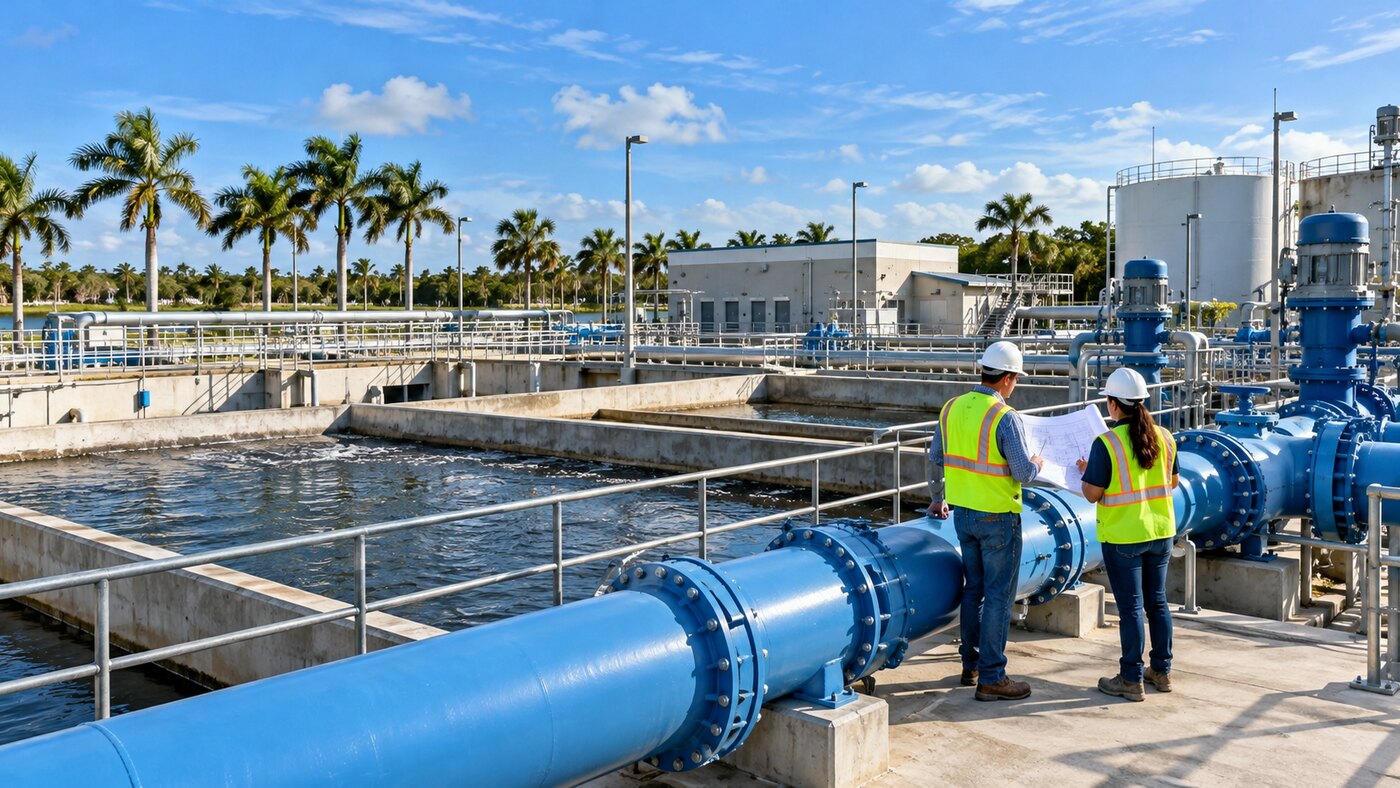
On the supply side, seven Polk County communities share $12.6 million for brackish-water development through the Polk Regional Water Cooperative. Tampa Bay Water received $10 million to expand treatment capacity by 12.5 million gallons per day. Six reclaimed-water projects share $19.1 million, including work in Fort Myers and Apopka.
These are announced awards, not completed projects. Construction dates, local matching costs and household connection schedules depend on the individual recipients and agreements. Residents should use the state project list and the relevant local government for parcel-level effects.
The state says springs funding awarded since 2019 totals $480 million and is associated with an estimated 900,000 pounds of annual nitrogen reduction. It says commitments through the alternative-supply program since 2019 are expected to produce more than 400 million gallons per day when fully operational.
Friday’s separate Florida algal bloom report shows the current monitoring picture. Funding announcements and weekly water samples measure different stages of the same public system and should not be treated as immediate cause and effect.
The Daily Quill follows public investment on its Business and Money desk. The next useful evidence will be recipient agreements, construction schedules and measured project outputs, not another announcement repeating the same total.