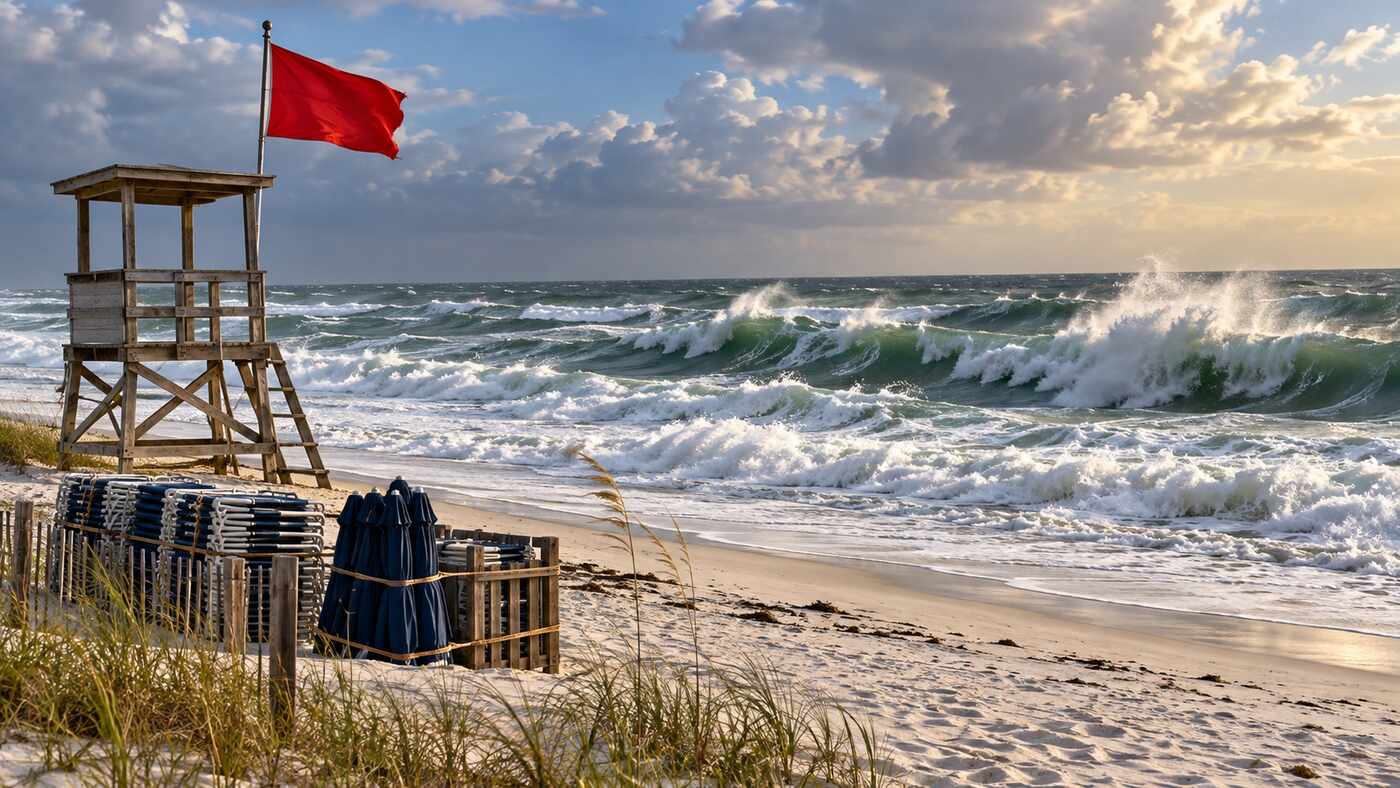
An Alabama rip current warning remains in effect for the coastal area through 6 p.m. Monday, Oct. 26, according to the National Weather Service in Mobile. The office also lists hazardous marine conditions, including a Small Craft Advisory and building waves.
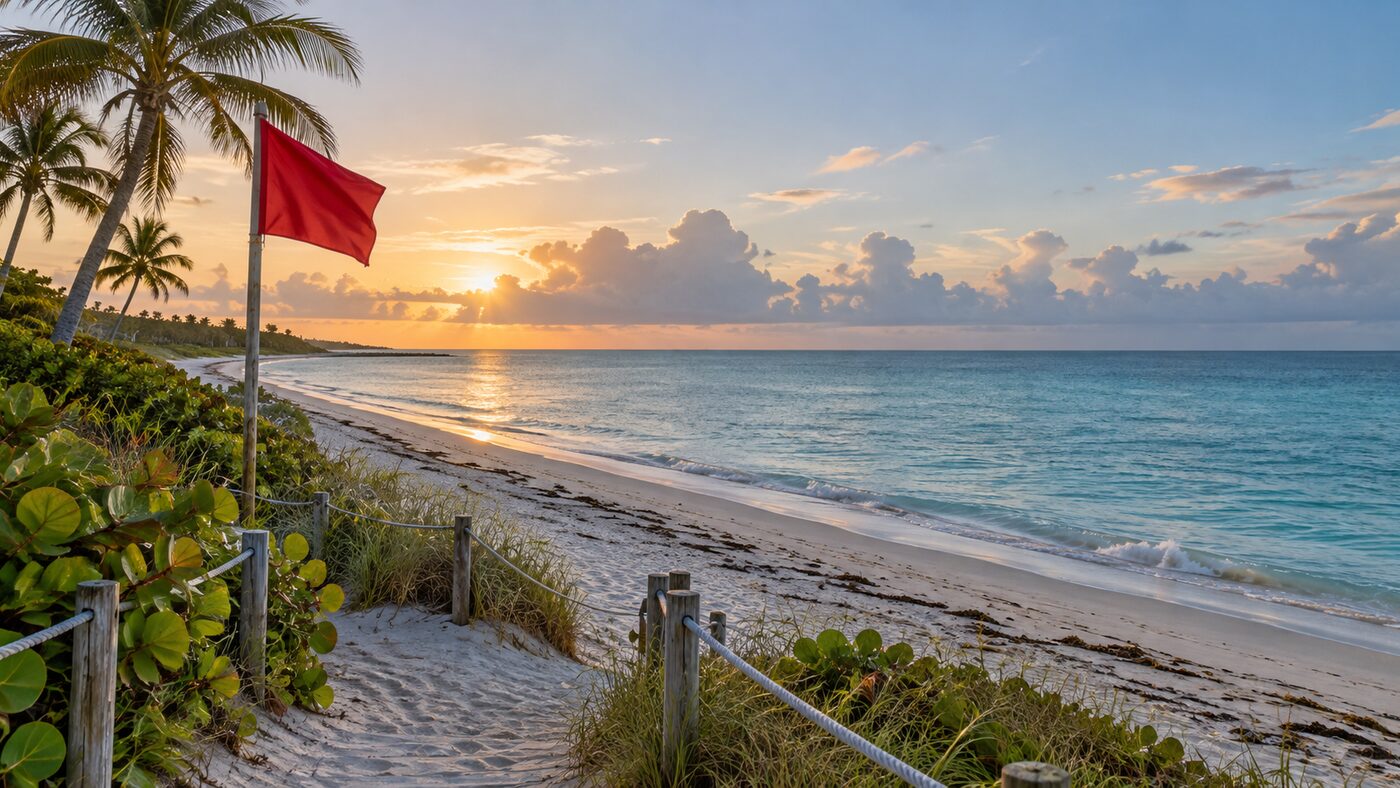
The safest response is to stay out of the Gulf when local beach officials or the weather service identify dangerous surf. Sunny skies do not make the water safe.
Alabama rip current warning timeline
The National Weather Service Mobile office updated its hazard display at 5:18 p.m. CDT Sunday.
| Hazard | Listed timing | Practical effect |
|---|---|---|
| Rip Current Statement | Through 6 p.m. Monday, Oct. 26 | Dangerous currents can carry swimmers away from shore |
| Small Craft Advisory | Through Monday | Winds and waves create hazardous conditions for small boats |
| Marine conditions | Winds 15-25 knots; gusts may reach 30 knots | Loose gear can shift; handling becomes more difficult |
| Waves | Expected to build between 4 and 7 feet | Small boats can be capsized and surf hazards increase |
Conditions differ by beach and time. Check the current beach flag at Gulf Shores, Orange Beach, Dauphin Island or the relevant local authority in addition to the weather service forecast.
Treat the Alabama rip current warning as one layer of the decision. Beach flags and lifeguard directions reflect conditions at the shoreline, while the forecast describes a broader area and period. If official messages differ, follow the most restrictive instruction. Never assume another beach a few miles away has the same water conditions.
Five steps before entering the water
- Read the official beach forecast and current flags, not an old screenshot.
- Swim only at a guarded beach and follow lifeguard instructions.
- Keep children and weak swimmers out when the surf is questionable.
- Do not enter rough water to attempt an untrained rescue; alert a lifeguard or call 911.
- Recheck conditions after arrival because risk can change during the day.
The National Weather Service describes high risk as conditions extremely favorable for numerous dangerous rip currents. A risk forecast does not identify the exact location of every current.
If a rip current catches a swimmer
The weather service rip-current safety guide says to stay calm, wave, yell and float. Do not exhaust yourself fighting directly against the current.
If able, swim parallel to the shoreline to leave the narrow current, then angle back toward shore. If escape is not possible, float or tread water and signal for help.
The flow carries a swimmer seaward rather than beneath the surface. Panic and exhaustion make the situation more dangerous.
For a person on shore, throw flotation and get a trained rescuer. Many fatalities involve someone entering the water to help without equipment or training.
Boat operators face a separate hazard
The Small Craft Advisory is not a swimming alert, but it reinforces the rough coastal pattern. The weather service lists sustained winds from 15 to 25 knots. Gusts may reach 30 knots, while waves are expected to build between 4 and 7 feet.
Small-craft operators should check the exact marine zone forecast, secure loose items and avoid treating a general coastal summary as a route-specific decision. The operator remains responsible for vessel limits and crew experience.
Why the alert can outlast rain
Rip currents are driven by waves, swell, tides and shoreline features. They can occur during fair weather and near breaks in sandbars, piers, jetties and inlets.
The current Alabama rip current warning is a water hazard, not a prediction that every beach will look stormy. Check official flags and stay out when advised, even if the sky appears calm.
For the broader inland outlook, see The Daily Quill’s Central Alabama seven-day weather guide. Use the Mobile weather office for coastal updates.