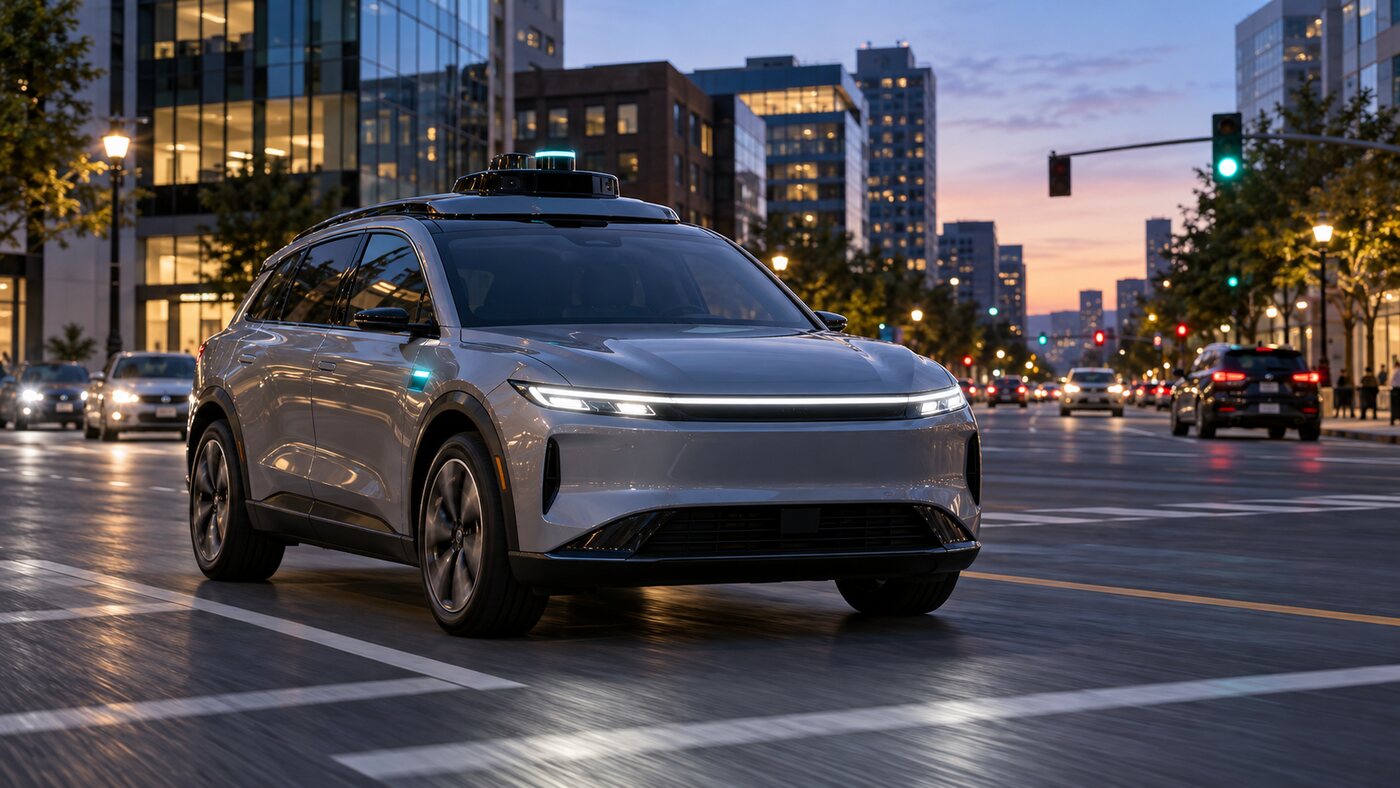
Cyan lights on self-driving cars could become a standardized visual signal under a federal proposal announced Friday, but the marker lamps would be optional and the rule is not yet final.
The National Highway Traffic Safety Administration says its proposal would set specifications for the color, placement, activation and visibility of marker lamps on vehicles equipped with automated driving systems. The goal is to create a consistent signal for police officers and other road users when an automated driving system is operating the vehicle.
NHTSA opened a 30-day public-comment period tied to docket NHTSA-2026-1519. The proposal also addresses lighting controls on vehicles designed to operate without a human driver and updates testing rules for modern headlamps.
What cyan lights on self-driving cars would mean
Under the proposal, cyan would identify an active automated driving system. The federal announcement describes the lamps as optional, meaning the proposal would standardize them if used rather than require every automated vehicle to display one.
That distinction matters. A cyan marker would not, by itself, prove that every driving task is safe or that a vehicle can operate autonomously everywhere. It would be a visible status signal governed by technical rules for mounting and visibility.
The agency’s Oct. 23 announcement does not make the marker legal nationwide immediately. A proposal must go through the federal rulemaking process, including public comments, before the agency decides whether to issue a final rule and what changes it may contain.
Readers can review the official NHTSA announcement and follow docket NHTSA-2026-1519 at Regulations.gov. The docket is the place to look for the formal proposal, supporting material, public submissions and the exact comment deadline once the notice is published.
Other lighting rules in the proposal
The automated-vehicle marker is only one part of the package. NHTSA says the proposal would modernize manual turn-signal, hazard-warning and beam-switching control requirements for vehicles operated only by automated driving systems.
It would also update an integral-beam headlamp test that uses a fixed 12.8-volt requirement. The agency says manufacturers could instead certify performance at design voltages suited to LED and other advanced lighting systems.
Another change would remove a required vertical ordering for lower and upper headlamp beams. NHTSA presents that revision as added design flexibility that would leave illumination and safety-performance standards in place.
Together, the changes address two different problems: how people recognize an automated system at work, and how older equipment rules fit vehicles built with newer technology or without conventional driver controls.
Why a standardized signal could matter
A common visual signal may help road users avoid having to interpret different colors or lamp placements from different manufacturers. For law enforcement and emergency responders, consistency could make it easier to recognize when an automated system is active during a stop, crash response or roadside encounter.
The proposal still raises questions worth examining in the docket. A useful standard needs to define when the light activates, whether it stays on during remote assistance or a system handoff, how visible it is in daylight and how it interacts with emergency-vehicle lighting.
Those questions are not evidence that the proposal answers them poorly. They are examples of the operational detail that matters when a concept such as cyan lights on self-driving cars moves from a press summary into binding technical language.
How to comment on the federal proposal
NHTSA says comments may be filed under docket NHTSA-2026-1519 during a 30-day period following publication of the notice in the Federal Register. Anyone submitting a comment should read the docket instructions, identify the specific provision involved and explain the evidence or experience behind the recommendation.
A focused comment is usually more useful than a general opinion. Road users might address lamp visibility or confusion with existing signals. Automakers and equipment suppliers may have testing data. First responders may be able to describe roadside communication needs.
The proposal is separate from another negotiated rulemaking process that NHTSA said will address other parts of Federal Motor Vehicle Safety Standard 108. That means readers should not assume every federal vehicle-lighting question is being decided in this single docket.
For related transportation coverage, read The Daily Quill’s report on codeshare flight fines and passenger protections. Drivers can also use the federal NHTSA recall lookup guide to check a vehicle by VIN or license plate.
For now, cyan lights on self-driving cars remain a proposal, not a new universal road rule. The practical next step is public review of the docket, followed by NHTSA’s decision on whether and how to finalize the standard.